Subterranean termite mitigation in older Middlesex County structures demands structural precision rather than surface broadcast spraying. In neighborhoods like Belvidere, The Acre, and Back Central, historic…
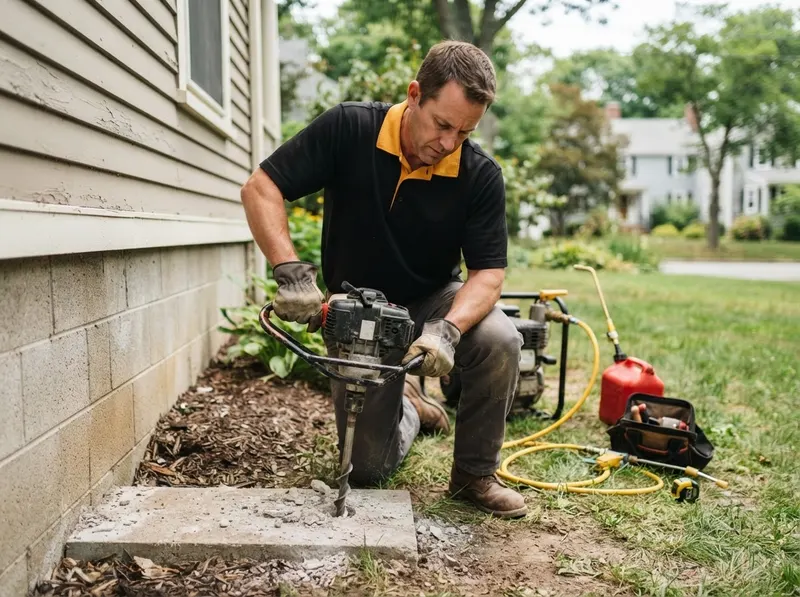
Subterranean termite mitigation in older Middlesex County structures demands structural precision rather than surface broadcast spraying. In neighborhoods like Belvidere, The Acre, and Back Central, historic multi-family properties and Queen Anne homes frequently feature fieldstone, split-granite, or unreinforced brick foundations. Eastern subterranean termites construct earthen mud shelter tubes through microscopic mortar voids and cold joints, moving upward from damp soil to digest soft springwood inside structural sills, floor joists, and wall framing. Left unaddressed, wood-boring feeding creates internal structural voids that compromise floor stability and trigger urgent tenant safety issues.
Zandrix Insect Defense establishes continuous chemical and physical boundaries along the soil-foundation interface. Standard protocols involve excavating a continuous four-to-six-inch trench directly abutting foundation walls, rodding liquid termiticide into backfilled soil at four gallons per ten linear feet, and core-drilling exterior concrete slabs or basement footings where soil access is restricted. For high water-table zones near the Merrimack River and Concord River Greenway, such as Centralville, Pawtucketville, and Sacred Heart, low-toxicity exterior baiting grids are integrated. Hexaflumuron or noviflumuron bait matrices intercept foraging worker castes, systematically arresting chitin synthesis across the parent colony without broad-spectrum chemical leaching.
Decision guidance dictates treatment method based on construction design: complete liquid perimeter barriers suit accessible dirt-perimeter basements and unfinished stone foundations in South Lowell and the Highlands, while non-destructive in-ground bait systems serve properties abutting historic river canal walls, brick-paved aprons, or tight lot lines in Downtown Lowell. While liquid barriers offer immediate lethal exclusion at the perimeter line, subterranean baiting networks provide continuous area-wide monitoring with zero structural soil disruption. All installations reject arbitrary monthly contracts in favor of scheduled scientific monitoring cycles, protecting historic housing stock against long-term colonization.
Every job gets a firm, written price after a free on-site visit.
Tell us about your subterranean termite mitigation job in Lowell and we'll send a clear, written quote, usually the same day.
 Zandrix Insect Defense