Commercial structures in Middlesex County encounter distinct biological vectors due to high building density and aging infrastructure. Along the Merrimack River corridors and the Concord River Greenway, commercial…
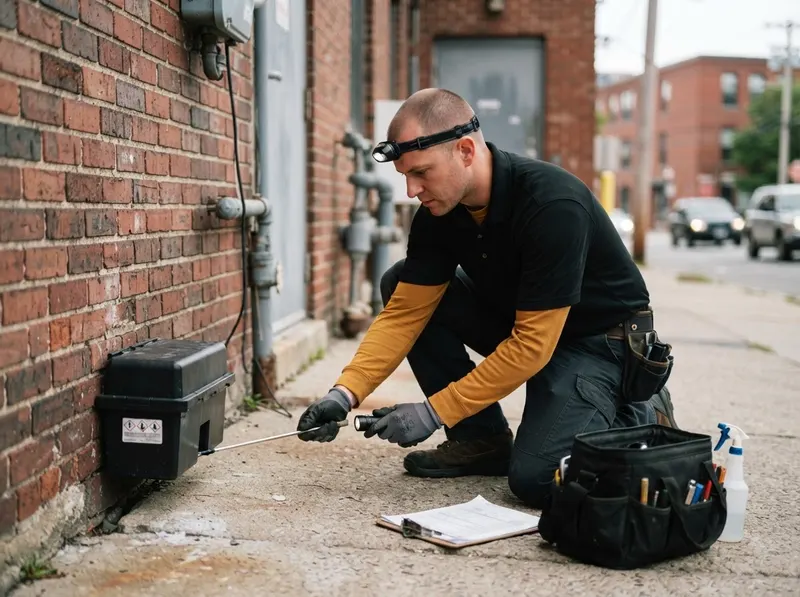
Commercial structures in Middlesex County encounter distinct biological vectors due to high building density and aging infrastructure. Along the Merrimack River corridors and the Concord River Greenway, commercial properties in Downtown Lowell and The Acre frequently house brick-and-beam architecture where historical stone foundations, floor drains, and utility conduits provide direct pathways for subterranean rodents and blattella germanica (German cockroaches). Historic conversions near the Boott Cotton Mills Museum face persistent moisture migration that sustains perimeter pests inside wall voids. Instead of relying on routine baseboard aerosol applications that merely cause pests to scatter deeper into wall cavities, commercial perimeter defense establishes definitive physical barriers, closing utility penetrations exceeding 0.25 inches with copper mesh and elastomeric sealants.
Multi-family rental properties, retail storefronts, and food-service facilities require distinct operational strategies. In high-turnover residential complexes throughout Centralville, Sacred Heart, and Back Central, localized chemical treatments fail when tenant turnover repeatedly breaches interior sanitary boundaries. The technical trade-off centers on passive chemical suppression versus non-chemical mechanical exclusion: chemical surface sprays degrade under commercial washdowns and warehouse cleaning routines, whereas structural entry-point exclusion stops rodent transit lines permanently at exterior masonry borders. For mixed-use developments in Pawtucketville, Belvidere, and the Highlands, industrial-grade monitoring captures exact pest counts across loading docks and refuse staging zones, preempting structural contamination before food storage areas or restaurant pantries suffer product loss.
Operational protocols follow three verifiable stages. First, an on-site structural audit isolates thermal anomalies, perimeter gaps, and utility pathways through historic stone or concrete foundations. Second, technicians execute mechanical exclusion, sealing basement sill plates, boiler room line sets, and dock leveler gaps with metal barrier cloth. Third, tamper-resistant monitoring enclosures record baseline population counts under strict health-department data standards, ensuring that property owners in South Lowell and the UMass Lowell service corridors satisfy commercial sanitary inspections without long-term chemical saturation.
Every job gets a firm, written price after a free on-site visit.
Tell us about your commercial pest control job in Lowell and we'll send a clear, written quote, usually the same day.
 Zandrix Insect Defense